
Sports Apps Are Losing the Second Screen. Here's What's Replacing Them
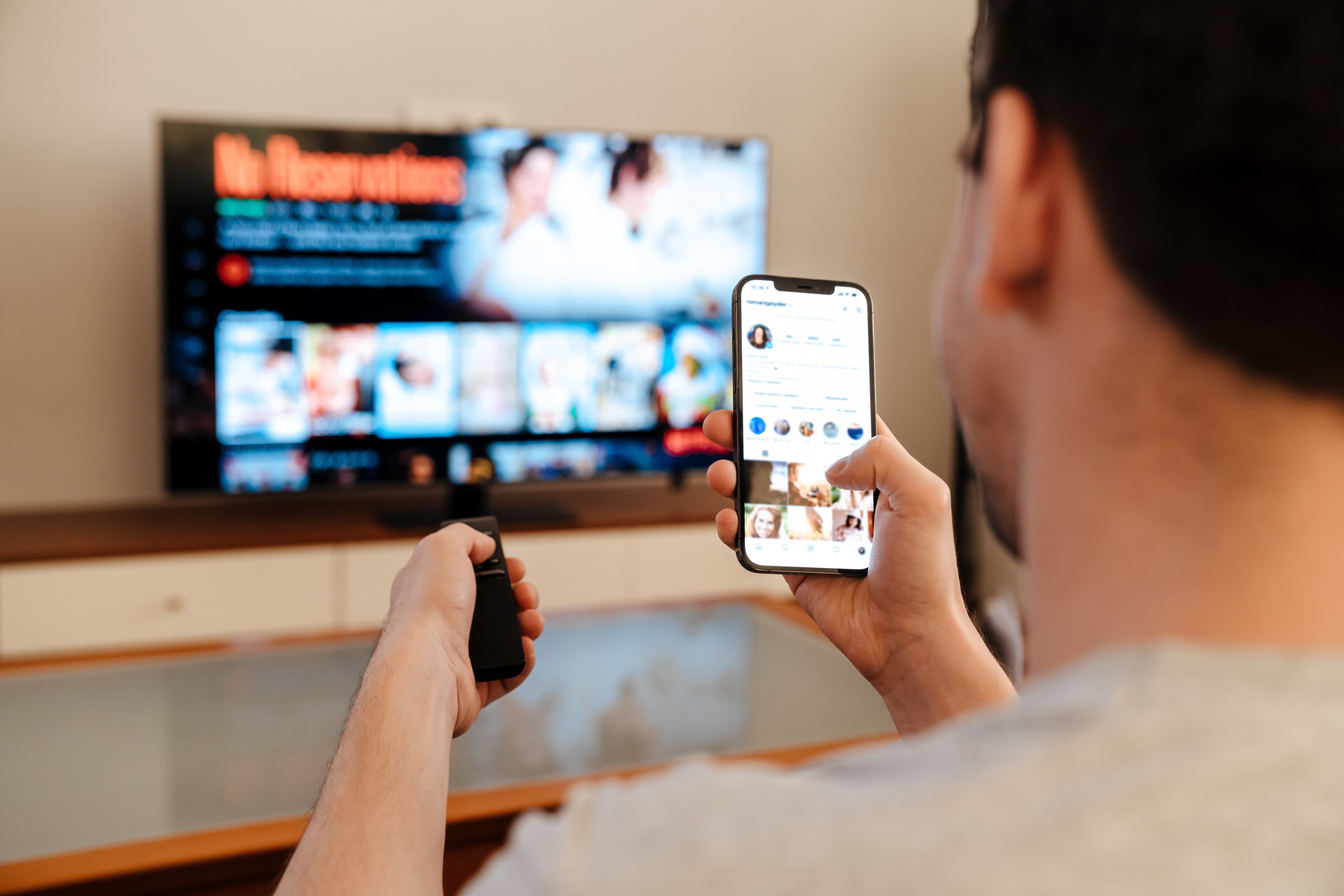
TL;DR: 87% of sports fans use a second screen during live matches, and the vast majority go straight to a social feed, not a companion app. Leagues have invested heavily in apps that can't replicate what fans actually want: shared reactions, stakes, and public proof they called it right. Social prediction markets are filling that gap. On Kash, brands and rights holders deploy fan engagement markets in 48 hours via reply or quote post with @kash_bot_trades — directly inside the conversation, not competing with it.
[Last updated: April 14, 2026]
The Model That Made Sense… Until It Didn't
The biggest assumption in sports fan engagement is wrong.
For the better part of a decade, leagues, clubs, and rights holders have operated on the same mental model: TV is the first screen, phone is the second screen, and the job of a companion app is to enrich the first-screen experience. It's a logical model. It's also a model that describes how fans used to behave, not how they behave now.
According to IMG's 2025 Digital Trends Report, there is no longer a "second screen." The phone isn't supplementing the broadcast. For a growing share of fans, it is the broadcast. Sport dominates the big screen; phones dominate attention. And what dominates phone attention during live sport isn't your app. It's a social feed.
With 104 matches scheduled between June 11 and July 19, the 2026 FIFA World Cup is the largest concentration of second-screen attention in the history of sport. If your fan engagement strategy is still architected around a companion app, you are optimising for the wrong surface, and you have roughly eight weeks to correct it.
What Companion Apps Solved
Companion apps weren't a mistake. They were the rational response to a real problem.
In the early 2010s, sports organisations watched helplessly as fans' attention migrated to their phones during live matches. The solution seemed obvious: build the phone. Create something that pulled fans into your ecosystem rather than losing them to social platforms you didn't control. The NFL, NBA, Premier League, and virtually every major rights holder invested accordingly.
The logic held: if you own the second screen, you own the data, the advertising inventory, the commerce layer, and the long-term fan relationship. Companion apps weren't just engagement tools, they were strategic infrastructure.
The problem isn't the logic. The problem is what actually happened at the moment of truth: kick-off.
Where Second Screen Sports Engagement Actually Happens
87% of sports fans use a second screen while watching sport. Among Gen Z, that figure exceeds 80% and they are 20% more likely than average to use social media simultaneously with the broadcast. For the 2026 World Cup specifically, 93% of fans say they plan to second-screen the tournament.
The question is where they go.
When fans pick up their phone during a live match, the primary activities are: checking statistics and lineups (63%), using social media (39%), watching reaction content, and messaging friends. Among fans under 27 (the demographic that will define the next decade of sports consumption) social media usage during live sport rises to 50%.
X remains the dominant platform for live sports conversation. Sports is the #1 topic of discussion on X. FIFA's official 2022 World Cup data recorded 93.6 million World Cup posts generating 5.95 billion engagements across the group stage alone. FIFA has now signed TikTok as its official preferred platform for WC 2026, with research showing fans are 42% more likely to tune into live matches after engaging with sports content on TikTok.
Social platforms aren't competing with companion apps for second-screen real estate. They are the second screen.
The Second Screen App Problem Nobody Talks About
The average smartphone user has 80 apps installed but actively uses only 9 per day. Sports apps do well on frequency. They are opened more times per month than almost any other app category. But frequency during the off-season is not the same as attention during the 90 minutes that matter most.
The specific failure mode of companion apps is structural, not executional. Consider what fans want from their phone during a live match:
1. Shared reactions: "Did you see that?" sent to a group chat or posted to a feed
2. Social proof: seeing that thousands of others share your read on what just happened
3. Stakes: something that makes the next five minutes matter more than they already do
4. Reach: the ability to be right about something in a way other people can witness
A companion app can deliver stats. It cannot deliver any of the four things above. Those behaviours require a social graph. And the social graph exists on X, TikTok, and Instagram, not inside a league-built app.
This is the strategic gap that IMG identified as the defining trend of 2025: the end of "second screen" as a category entirely. The phone isn't second. For significant portions of audiences (especially under 35s) the phone is primary, and the TV is the ambient background. Any engagement architecture that doesn't start with this fact is built on a false premise.
What's Replacing the Companion App
The organisations winning second-screen engagement in 2025 aren't trying to replicate social platforms inside their apps. They're meeting fans where the social behaviour already exists, and creating structured reasons for that behaviour to happen.
The formats that work share three characteristics: they are native to a social feed, they create participation rather than consumption, and they have visible outcomes that fans can be right or wrong about.
Sports apps offer content. The social feed offers a game within the game.
The most commercially effective version of this (and the one with the highest ceiling going into the World Cup) is the prediction layer. Not in the traditional sense of prediction contests buried inside an app with gamified points that go nowhere. In the sense of social-native prediction markets: a format where making a call, posting it publicly, and being proven right 90 minutes later produces the exact four behaviours fans are looking for during live sport.
| Format | Native to Social Feed | Creates Participation | Visible Outcome | Creator Revenue |
|---|---|---|---|---|
| Companion App | No | No | No | No |
| Live Social Polls | Yes | Partial | No | No |
| Fantasy Sports | No | Yes | Delayed | No |
| Prediction Contests (app-based) | No | Yes | Delayed | No |
| Social-Native Prediction Markets | Yes | Yes | Real-time | Yes (30%) |
The distinction in that final row matters. Social-native prediction markets (built on and for X) don't require fans to leave the conversation to engage. They live inside the feed. A fan quotes a tweet, states a position, and the outcome resolves on-chain in real time. The market isn't separate from the social experience. It is the social experience, with stakes attached.
The 2026 Second Screen Window
Rights holders, sponsors, and brands activating at the World Cup are facing a structurally different fan than the one that showed up in Russia in 2018. That fan still used a second screen. The 2026 fan uses one screen (their phone) and splits attention between the broadcast and the feed.
The activation formats that will generate organic reach in June and July are the ones that exist where the fan already is: inside the social conversation, providing structured participation during the 90 minutes of a match, with real-time outcomes that create shareable moments.
Prediction formats (when deployed natively inside the social feed rather than buried in a companion app) are positioned to out-perform traditional digital activations on reach, time-on-platform, and post-event recall.
The mechanism is simple: a fan who makes a public prediction has a personal stake in the outcome. They watch more closely, share their position, and return after the final whistle to claim (or process) being right.
Traditional prediction platforms like Polymarket and Kalshi validate the category, with public data showing billions in monthly volume. But they cannot serve this use case: they require manual market approval (days, not minutes), have no native social integration, and offer nothing to brand partners in terms of revenue share or co-branded activation tooling.
The platform built for this window is one where a brand partner can deploy a market in 48 hours, distribute it directly through an X quote-tweet to @kash_bot_trades, and earn 30% of the revenue generated from fan participation.
That infrastructure (permissionless market creation, X-native distribution, and a creator revenue model) is what Kash is built to deliver. Kash's testnet is live. For brands and rights holders building their World Cup activation stack, the deployment window opens now. The tournament starts June 11. Related: How Brands Are Activating at the 2026 World Cup
FAQ
What is second screen engagement in sports?
Second screen engagement refers to fans using a second device (typically a smartphone) while watching live sport on television. Research shows 87% of sports fans do this. In practice, the "second screen" has become the primary attention device for many younger fans, with IMG's 2025 Digital Trends Report declaring the "second screen" concept obsolete.
Why are sports companion apps losing second screen engagement?
Companion apps deliver content (stats, replays, lineups) but cannot replicate the social behaviours fans want during live sport: shared reactions, social proof, stakes, and public visibility. Those behaviours require a social graph that exists on X, TikTok, and Instagram, not inside a league-built app.
What is social-native prediction, and how is it different from companion apps?
Social-native prediction markets live inside the social feed rather than requiring fans to switch to a separate app. Fans post a position via quote-tweet, market resolution happens on-chain in real time, and the outcome is visible to their social graph, creating participation, stakes, and shareable outcomes that companion apps structurally cannot deliver.
How can brands activate around the World Cup on the second screen?
The most effective formats are native to the social feed, with real-time outcomes and participation mechanics. Social-native prediction markets (deployed through X) offer brand partners organic distribution, real-time engagement during matches, and a revenue share structure (30% on Kash) rather than pure cost-centre activation.
When do brands need to start building for the World Cup second screen?
June 11. Kash's mainnet is live. Standard deployment from brief to live market is 48 hours. DMs open for brands and rights holders building their WC 2026 stack.