The Referee Factor: Which FIFA Officials Create the Most Chaos?
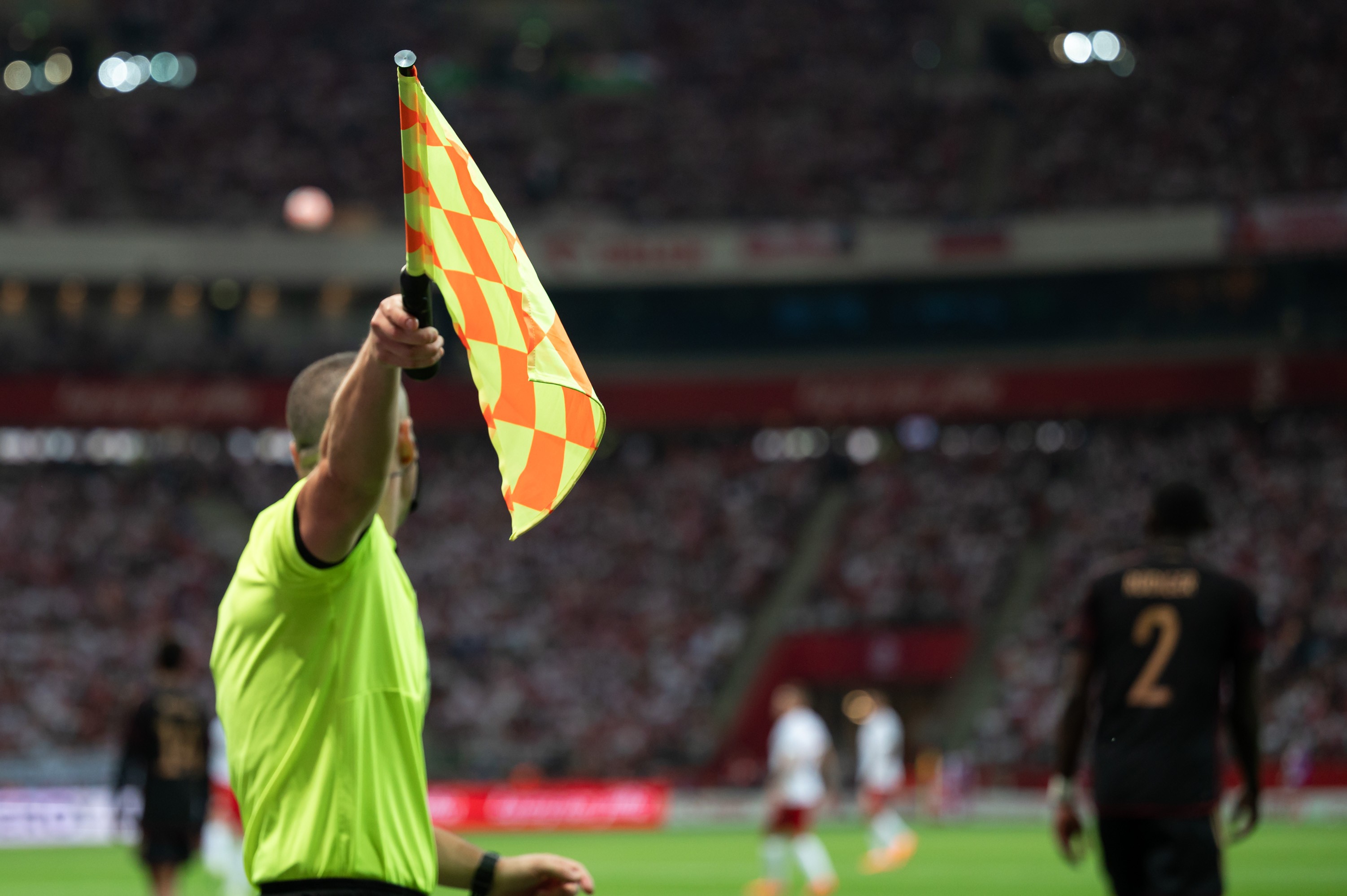
TL;DR: Most fans focus entirely on the teams. Smart fans have started paying attention to the name on the other side of the badge. A handful of FIFA's top officials are consistently correlated with elevated red cards, penalties, and VAR interventions etc. and when their assignments drop ahead of kickoff, those matches become flash market goldmines on Kash, the social prediction market where fans quote-tweet @kash_bot to predict every chaos moment in real time.
[Last updated: April 13, 2026]
How Referees Create Chaos
The 2022 World Cup quarterfinal between Argentina and the Netherlands lasted 120 minutes. It produced 17 yellow cards, 2 red cards, and left both sets of players furious enough that post-match scenes almost eclipsed the result itself.
The referee was Antonio Mateu Lahoz. The match was one of the most chaotic games in World Cup knockout history.
But before treating that as proof of anything: it was also a volatile quarterfinal between two physical teams with history, played at the highest pressure point of the tournament. Match intensity, rivalry context, and tactical fouling patterns all contribute to card counts. The referee is one variable among several.
That caveat matters. And it's exactly why most analysis stops there. This one doesn't.
The edge isn't claiming referees cause chaos. It's that certain officials are associated with elevated card counts and penalty decisions across enough different matches, against enough different teams, that the pattern becomes worth tracking as one input into your pre-match read.
Officiating data is still the most underused layer in World Cup analysis.
FIFA World Cup Stats: How Much Referee Variance Actually Exists?
The 2022 FIFA World Cup averaged approximately 3.5 yellow cards per match across 64 games. (FIFA Technical Study Group, 2022) But that average conceals significant variance at the individual match level, some games ended without a booking, others produced double-digit cards.
The variance becomes visible when you look at documented extreme cases against that baseline:
Referee | Match | Year | Stage | Yellows | Reds |
|---|---|---|---|---|---|
Valentin Ivanov (Russia) | Portugal 1–0 Netherlands | 2006 | R16 | 16 | 4 |
Antonio Mateu Lahoz (Spain) | Argentina 2–2 Netherlands (aet) | 2022 | QF | 17 | 2 |
2022 tournament average | — | 2022 | All stages | ~3.5 | ~0.06 |
Two referees. Two different tournaments. Two different sets of teams. Both produced card counts roughly 4–5x the tournament average. The 2006 match (the Battle of Nuremberg) became so notorious that FIFA convened a post-tournament disciplinary review of officiating standards. The 2022 match needs no introduction.
Neither was a clean sample: high-stakes knockout football skews card counts upward regardless of who's officiating. But the fact that both officials generated elevated numbers across multiple assignments in those tournaments, not just one match, is what makes them worth tracking as a profile rather than an anomaly.
Some of that variance is tactical. Some is rivalry temperature. Some is tournament stage: knockout football plays harder than group stage football by design.
What makes referee assignment worth tracking is when the same officials appear repeatedly in high-card matches across different teams and tournament contexts. Not once. Across a career of World Cup and confederation assignments.
That's not causation. It's a signal. The same way a team's set-piece record is a signal. Imperfect, correlational, useful when combined with other context.
The 3 Officiating Profiles That Move the Pre-Match Read
These aren't individual referees ranked by a single data point. They're three distinct officiating philosophies (patterns in how certain officials manage games) that historically correlate with elevated chaos metrics. Think of them as archetypes rather than indictments.
Profile 1: The Card Machine
Historical anchor: Antonio Mateu Lahoz (Spain)
High booking rates, an active whistle in contact situations, and a visible tendency to escalate card counts once player temperatures rise. The 17-yellow-card quarterfinal is the extreme end of the spectrum: statistically, the most-booked knockout match in World Cup history. (FIFA via Wikipedia, Argentina vs Netherlands)
Referees who show elevated booking rates in group stage matches (controlling, roughly, for match stakes) tend to carry that pattern into knockouts. Look at Mateu Lahoz's broader tournament record in 2022: his group stage assignments also trended above the per-match average for bookings. (FIFA match reports, 2022) The teams change. The officiating philosophy doesn't.
The contrarian take to screenshot: check the official's group stage card rate before you form a view on whether a knockout match "should" be clean. Mainstream preview coverage almost never includes this.
Profile 2: The VAR-Active Arbiter
VAR arrived at the 2018 World Cup in Russia and changed how certain officials operate. (FIFA.com, VAR at the 2018 World Cup) The pattern that emerged by 2022: some referees use VAR as a standard operating tool rather than a last resort — calling checks more frequently than peers, going to the monitor more often, and generating extended stoppages throughout their matches.
This matters because every VAR review pauses the game, resets player intensity, and creates a pressure flashpoint for whatever comes next. Officials who generate more reviews produce more of these stoppages, and more of the moments that sit just before flashpoints.
This isn't "VAR referees cause more cards." It's "VAR-active officiating creates more volatile match states." The distinction is real, and it's worth flagging as one input into the pre-match picture.
Profile 3: The Penalty Box Philosopher
Not all officials call the same contact the same way. There's a genuine philosophical split in how top FIFA referees assess blocking and charging fouls in the penalty area, and officials who are consistent penalisers of box contact across their assignments tend to generate penalty rates above the match average.
The contrarian take: before you assess a team's attacking threat in the box, check who's officiating. Referee philosophy on penalty area contact is more consistent across a tournament than any individual team's ability to draw spot kicks. This is observable, trackable, and almost entirely absent from mainstream pre-match analysis.
(A systematic cross-tournament analysis of individual referee penalty rates vs. team attacking statistics would be required to make this claim precisely. Framed here as the hypothesis worth testing, not a proven finding.)
FIFA World Cup 2026 VAR Rules: What's Changed
The 2026 World Cup will use Semi-Automated Offside Technology (SAOT) at scale across 104 matches. (FIFA.com, 2026 technology) Offside reviews that ran 3–4 minutes in 2022 are projected to complete in under 30 seconds.
That's a structural change in match tempo. But SAOT handles geometry. Everything else — handball interpretation, penalty box contact, card-worthy vs. non-card-worthy challenges — still runs through referee judgment.
Referee judgment still varies. The expanded 48-team format means a larger officiating pool drawn from FIFA's 2026 appointment list — which means more variance in officiating style across 104 matches and more opportunities for assignment patterns to function as a live prediction signal. (FIFA.com, 2026 format)
How the Assignment Window Works in Practice
FIFA confirms referee appointments 24–48 hours before kickoff. That window is where the edge lives.
An official with a track record of elevated card involvement gets assigned to a knockout match between two physical squads. Most preview coverage focuses on team news, tactical shape, and historical head-to-head. The referee's career pattern doesn't appear in the pre-match section.
This is the layer that permissionless markets can price before the broader market catches up. On Kash, any fan can create a market around a referee assignment: "Will this match produce a red card?", "First booking before 30 minutes?", "Will VAR intervene before halftime?" — In 30 seconds, from X, before any platform has listed it.
The Fade mechanic works on the other side. When someone posts that a match "should be relatively clean" without factoring in who's officiating, that take is fadeable. The assignment is public. The career pattern is documentable. Quote-tweet @kash_bot and take the opposite position.
Being right about referee-driven chaos isn't luck. It's a research layer most fans skip entirely.
Platform Comparison: Where to Predict Referee Markets
Feature | Polymarket | Kalshi | Kash |
|---|---|---|---|
Interface | DeFi trading terminal | Finance-native terminal | Your X (Twitter) feed |
Trading mechanic | On-chain order book | Limit orders | Quote-tweet @kash_bot |
Market creation | Manual approval required | Curated — no user creation | Permissionless — 30 seconds |
Creator revenue | None | None | 30% revenue share |
Micro-narrative markets | Limited to major outcomes | Limited to approved events | Unlimited, any moment |
Flash market capability | No | No | Yes — live within seconds of assignment drop |
Referee-specific markets | Rare | No | Permissionless |
Social integration | Copy-paste link to share | Copy-paste link to share | Native to X feed |
How to Use Referee Data as Group Chat Ammunition
Before any World Cup knockout match:
Check the FIFA referee assignment (confirmed 24–48h before kickoff on FIFA.com)
Pull the official's card data from their recent World Cup and confederation tournament assignments
Note whether VAR reviews were a feature of their recent matches
Factor this in alongside team form, squad availability, and match stake. Not instead of them
This is the layer that doesn't show up in Sky Sports pre-match coverage, ESPN previews, or any of the mainstream prediction market dashboards. Available data. Almost nobody pulls it.
The 2026 World Cup (104 matches, 16 venues, revised VAR protocols, and a new officiating pool) will produce chaos moments in matches where most fans only looked at the team news. Calling one of those moments, with a documented reason you called it, is one of the better Proof of Intelligence cards available in the tournament.
FAQ
What are the key FIFA World Cup stats to track for referees?
Yellow cards per match, red cards per assignment, and VAR intervention frequency across recent tournaments are the most accessible. FIFA publishes official match reports for every World Cup game at FIFA.com.
Which referee issued the most cards in a World Cup knockout match?
Antonio Mateu Lahoz of Spain issued 17 yellow cards and 2 red cards in the 2022 World Cup quarterfinal between Argentina and the Netherlands — the most bookings in a World Cup knockout match on record. The match context matters: it was a high-intensity rival fixture at maximum tournament pressure, which contributed alongside officiating style.
What was the Battle of Nuremberg?
The 2006 World Cup Round of 16 match between Portugal and the Netherlands, refereed by Valentin Ivanov. It produced 16 yellow cards and 4 red cards, and prompted a FIFA review of officiating standards. It remains the most-carded World Cup match outside of the 2022 Mateu Lahoz quarterfinal.
What are the World Cup 2026 VAR rules?
The 2026 FIFA World Cup introduces Semi-Automated Offside Technology (SAOT) to accelerate offside reviews. Penalty decisions, straight red cards, and mistaken identity cases remain under standard VAR review protocol as used in 2022.
Does the referee assignment actually affect how a World Cup match plays out?
It's one factor among several. Match intensity, rivalry history, tactical approach, and tournament stage all influence card counts and penalty decisions. Referee assignment is a correlational signal (not a deterministic one) but officials with consistent patterns across multiple tournaments and teams are worth including in a pre-match read.
How do I predict referee-related moments at the 2026 World Cup?
On Kash, quote-tweet @kash_bot to trade on any referee-specific market, from "Will this match produce a red card?" to "First booking before 30 minutes?" Markets can be created in 30 seconds the moment an assignment drops. The Fade mechanic lets you take the opposite side of any take you disagree with in one click.
in one click.

